
Cooking Bison Sous Vide
Nov 12, 2017

Jill O’Brien
We've received many questions about cooking bison using a sous vide. I initially resisted purchasing one due to their size, but a new wand sized sous vide recently came out and it works with any vessel that holds water. So, I bought one (Anova), but I admit I'm still learning how to use it...
If any of you have experience and would care to share your tips, please do so in the comment section below.
In looking for guidance myself, I found limited suggestions for roasts, and none that were grass-fed/finished. I guessed my way through “the what and how to do” based on what I was trying to achieve, which was a medium rare chuck roast.
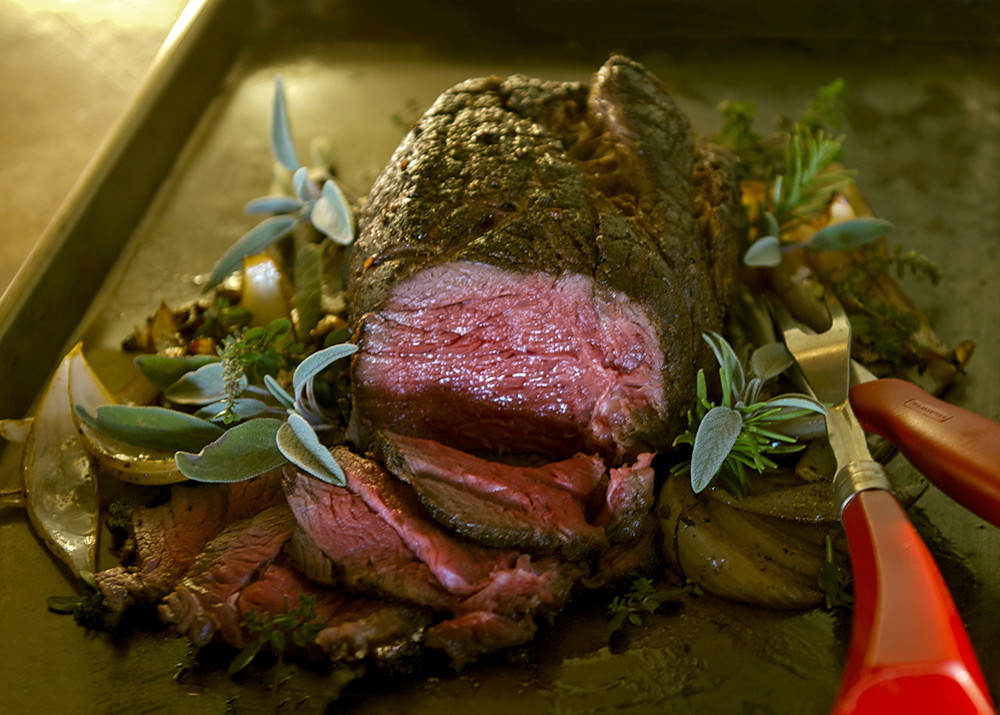
Set sous vide to 129 degrees and place in pot filled with hot water. Press the arrow to start. And allow water to heat. You will hear a beep when the temperature is achieved.
Mix 1 tablespoon of the olive oil and herbs together and rub over roast. Place roast in plastic bag, removing air and seal. *They suggest vacuum sealing – but I didn’t have one, and the bag worked fine.
Place the bag in the water and allow it to cook for 6 hours. *Total guess here.
Remove roast in the bag and place in a pan. Remove the roast from the bag and reserve juices. Remove the netting from the roast.
In a cast iron or heavy skillet, over medium to medium high heat, heat the oil. Place the sous vide roast in the hot pan and sear for four to five minutes before turning. Add the onion wedges to the pan shortly after the searing begins.
Turn the roast three times, searing for the same amount of time. Butt the ends up to the edge of the pan occasionally to brown those too.
Remove the roast and the onions from the pan and transfer to a platter and cover with foil. Let the roast rest for up to 10 minutes before slicing.
Deglaze the pan with wine or brandy and whisk in the reserved juices to incorporate. Thicken if desired.
Quickly whisk in the butter until smooth. Transfer the gravy to a bowl.
Slice the roast and pass with the gravy.


15 comments
A couple of comments here after reading the others again…
collagen and connective tissue starts to dissolve as you approach 155º+.
Cooking at say, 120º won’t do much, and as much as I can remember at this moment, stretching out your cook time to say, 3 days, wouldn’t do any more because it’s still at 120º. That’s the point of sous vide. You maintain a certain temperature and the food will remain static.
I think too that you still want to let the meat rest because what that does is allow the juices to flow back into the tissue, so you don’t lose it all on the cutting board.
I did come across this site which might be helpful: http://www.scienceofcooking.com/meat/slow_cooking1.htm
I’ll also state that I could be totally wrong about all of this. ;-)
I forgot about the time issue so I have the feeling this bison roast won’t be ready in 3.5 hours, and I don’t remember the weight (packaging is gone). I’m doing it at 133º with the Anova wand. I may have to go quick and cheap and just serve ravioli instead.
Hi Jill,
I’m very interested to see what other sous vide recommendations you come up with, I’ve been experimenting with bison with great success. Most recently, I knocked it out of the park with your 5oz and 8oz filets as well as a skirt steak and bone-in ribeye. A couple of things I’ve found:
Meat doesn’t need to rest after sous vide; resting is traditionally to even out the temperature gradient but sous vide cooks to an even temperature eliminating the need to rest even after searing (this is debatable, try it both ways for us and report back!)
Lower temperatures for longer worked well on the different cuts across the board; I’d try 131 for 24 hours for a roast like this
Use a mild-flavored, heat-tolerant oil to pan sear (I prefer grapeseed oil and also live in an apartment where grilling isn’t an option); The oil on very high heat should drop your searing time to 1-2 minutes per side keeping the meat on the rare side but with a nice crust
I’ve cooked with the Anova and Joule and like each of them for different reasons. The Anova is larger, a little louder, but is easier to use in terms of setting the temperature. The Joule is smaller, a little quieter, but you need to use the app which I really like (they have some great recipes!) though I can see why some people aren’t fans.
Thank you for all that you do and keep the recipes coming! :)