
Cooking Bison Sous Vide
Nov 12, 2017

Jill O’Brien
We've received many questions about cooking bison using a sous vide. I initially resisted purchasing one due to their size, but a new wand sized sous vide recently came out and it works with any vessel that holds water. So, I bought one (Anova), but I admit I'm still learning how to use it...
If any of you have experience and would care to share your tips, please do so in the comment section below.
In looking for guidance myself, I found limited suggestions for roasts, and none that were grass-fed/finished. I guessed my way through “the what and how to do” based on what I was trying to achieve, which was a medium rare chuck roast.
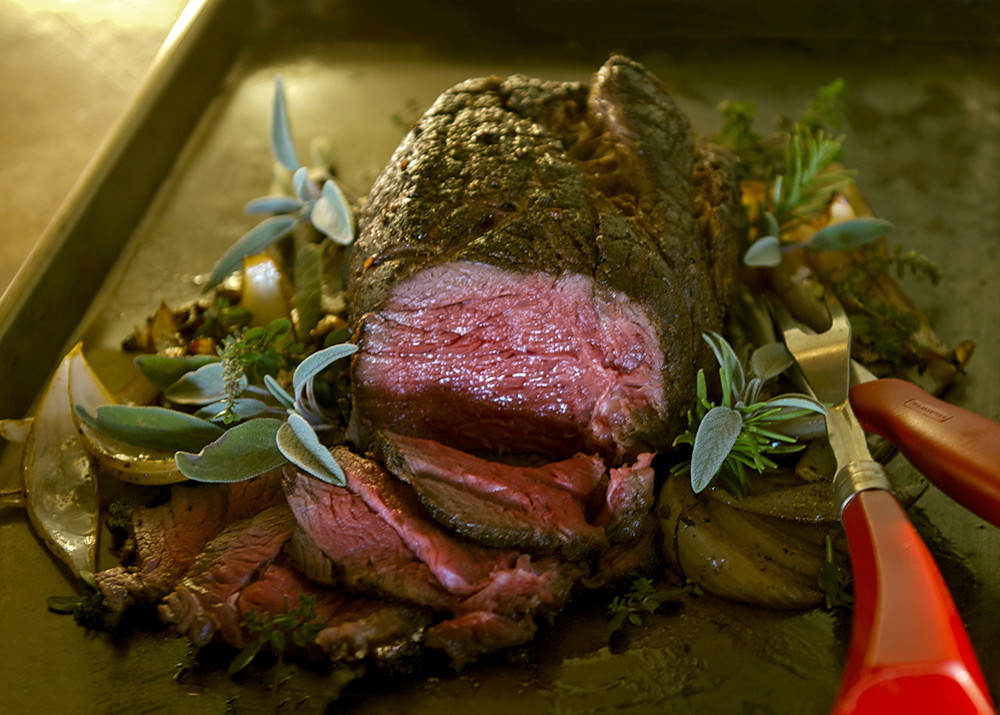
Set sous vide to 129 degrees and place in pot filled with hot water. Press the arrow to start. And allow water to heat. You will hear a beep when the temperature is achieved.
Mix 1 tablespoon of the olive oil and herbs together and rub over roast. Place roast in plastic bag, removing air and seal. *They suggest vacuum sealing – but I didn’t have one, and the bag worked fine.
Place the bag in the water and allow it to cook for 6 hours. *Total guess here.
Remove roast in the bag and place in a pan. Remove the roast from the bag and reserve juices. Remove the netting from the roast.
In a cast iron or heavy skillet, over medium to medium high heat, heat the oil. Place the sous vide roast in the hot pan and sear for four to five minutes before turning. Add the onion wedges to the pan shortly after the searing begins.
Turn the roast three times, searing for the same amount of time. Butt the ends up to the edge of the pan occasionally to brown those too.
Remove the roast and the onions from the pan and transfer to a platter and cover with foil. Let the roast rest for up to 10 minutes before slicing.
Deglaze the pan with wine or brandy and whisk in the reserved juices to incorporate. Thicken if desired.
Quickly whisk in the butter until smooth. Transfer the gravy to a bowl.
Slice the roast and pass with the gravy.


15 comments
Jill,
Just wanted to chime in on sous vide as well. I have two different “sticks” an Anova and now a Joule as well. Funny that I found this post today as I was standing with a 3# roast in hand last week trying to decide if I should try it souse vide or my usual hi/low oven method. Oven won out and after reading this Im happy I have more info to go on the next time.
I’ve used the Sous Vide method for bison steaks and you can’t go wrong no matter how thick or thin.
I set my Joule for the outcome temp, usually around 135/137 for medium rare, anytime from an hour or more depending on time frame I need dinner on the table, then a fast sear on the grill or in a rippin hot pan, few minutes to rest and they are perfectly cooked and awesome every time!
Another awesome thing about the Sous Vide method…reheating!
I often cook not knowing how many will actually make it to dinner, so not unusual to have to freeze half a roast or some steaks because of the crazy schedules here. You can heat it through to the temperature you like, even medium rare, and not have anything overcooked!
As Gene said above, check out ChefSteps for tons of helpful hint on how to use this method to its fullest.
Bon appétit,
Laura
Jill, For thanksgiving this year we took a 3# bison round roast and Sous Vide prepared it for 12 hours @ 137 degrees for a perfect medium rare. After removing from water bath, I seasoned & browned the roast in a cast iron skillet. Finally I sliced it thin and plattered ready to be served horseradish sauce on the side. It looked and tasted absolutely amazing. In fact, my wife and I agree this was our all time favorite thanksgiving meal. Yesterday I showed a picture of the sliced roast to your sister Susan at Gilbert House Resturaunt and she was blown away by how awesome it looked.
I will try this method also. Jill thanks for posting all this information. I am going to try it with a Prime Rib which I am hoping I won’t ruin. What plastic bag did you use? I think I will use the lower temperature suggested by Jerry. Happy holidays