
Cooking Bison Sous Vide
Nov 12, 2017

Jill O’Brien
We've received many questions about cooking bison using a sous vide. I initially resisted purchasing one due to their size, but a new wand sized sous vide recently came out and it works with any vessel that holds water. So, I bought one (Anova), but I admit I'm still learning how to use it...
If any of you have experience and would care to share your tips, please do so in the comment section below.
In looking for guidance myself, I found limited suggestions for roasts, and none that were grass-fed/finished. I guessed my way through “the what and how to do” based on what I was trying to achieve, which was a medium rare chuck roast.
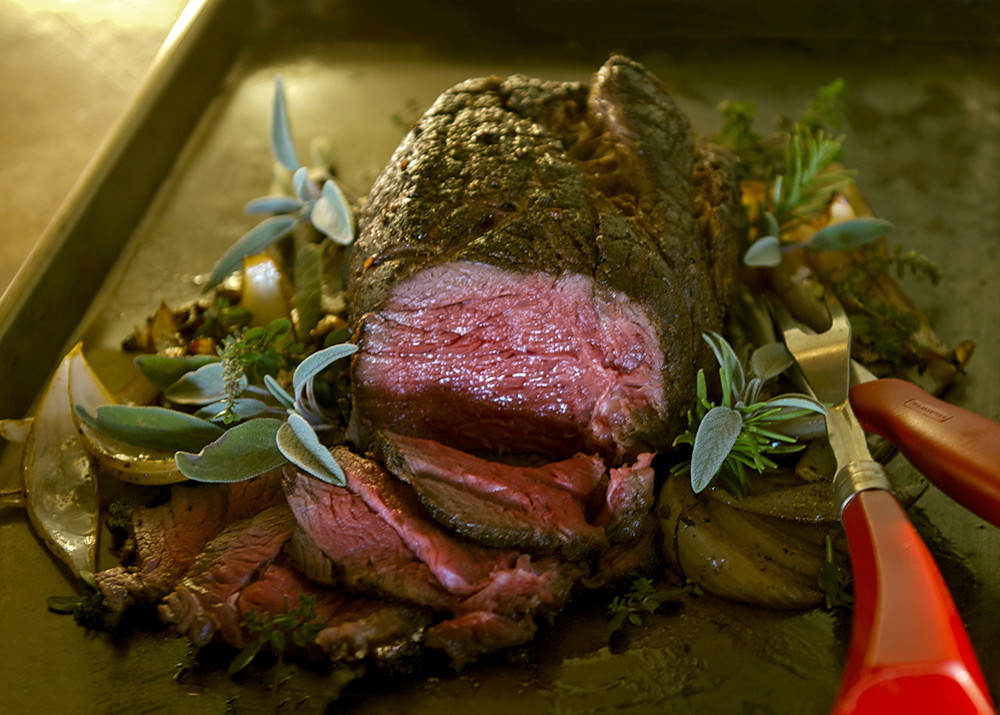
Set sous vide to 129 degrees and place in pot filled with hot water. Press the arrow to start. And allow water to heat. You will hear a beep when the temperature is achieved.
Mix 1 tablespoon of the olive oil and herbs together and rub over roast. Place roast in plastic bag, removing air and seal. *They suggest vacuum sealing – but I didn’t have one, and the bag worked fine.
Place the bag in the water and allow it to cook for 6 hours. *Total guess here.
Remove roast in the bag and place in a pan. Remove the roast from the bag and reserve juices. Remove the netting from the roast.
In a cast iron or heavy skillet, over medium to medium high heat, heat the oil. Place the sous vide roast in the hot pan and sear for four to five minutes before turning. Add the onion wedges to the pan shortly after the searing begins.
Turn the roast three times, searing for the same amount of time. Butt the ends up to the edge of the pan occasionally to brown those too.
Remove the roast and the onions from the pan and transfer to a platter and cover with foil. Let the roast rest for up to 10 minutes before slicing.
Deglaze the pan with wine or brandy and whisk in the reserved juices to incorporate. Thicken if desired.
Quickly whisk in the butter until smooth. Transfer the gravy to a bowl.
Slice the roast and pass with the gravy.


15 comments
Jerry & Gene – Thank you for the information. I will take both of your recommendations and see how it goes. Thanks for the tips!
jill
Jill,
Check out chefsteps.com and their immersion circulator “joule”.
You might be pleasantly surprised. I avoided buying one for all the same reasons as you.
This little “stick” is amazing.
gene
Much longer time – 24-48 hrs and a temperature of 134 – 138 deg F. Lower temp WILL dissolve the collagen and make a very tender roast. Tougher cuts like brisket need the longer time and more tender roasts need the shorter time. Never dries out and the outcome is the best you can do with bison. Sear after cooking with flame. Tender steaks need only 2 hr.